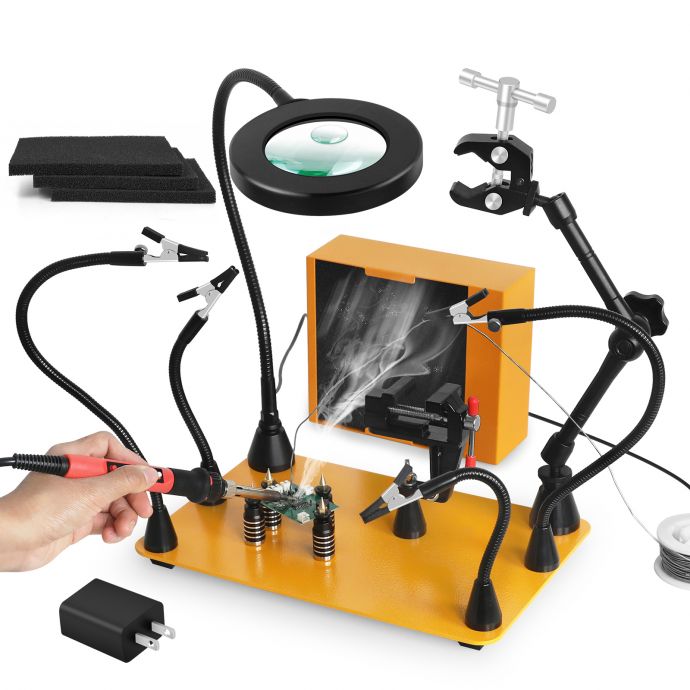
If you’ve ever fought with a slippery PCB, chased a tiny component across the workbench, or tried to hold wires in place while simultaneously trying to solder with precision, you already know that “basic” tools rarely deliver the results you want. Sure, you can improvise with tape, clamps, or even a steady hand—but soldering rewards repeatability, controlled positioning, and clean contact. That’s where Magnetic Helping Hands—especially the 3X advantage of magnetic triple-arm designs—raise your workflow from frustrating to reliably professional.
Instead of settling for a single pair of grippers and a fixed angle, a magnetic helping hands station with three arms, stronger magnetic holding, and adjustable positioning gives you what most soldering setups lack: stable control over the entire work area. Whether you’re building intricate electronics, repairing delicate devices, or doing fine wiring work on prototypes, the difference shows up immediately—in alignment, consistency, and the quality of your joints.
## Why soldering is more than “just melting metal”
Soldering seems straightforward at first glance: heat, melt, flow, and remove heat. In practice, however, the process depends on factors that can change second by second:
- **Component positioning**: A slight shift can cause misalignment or solder bridging.
- **Lead contact**: Poor contact delays heat transfer and can lead to dull, weak joints.
- **Heat management**: If you spend too long heating because the part won’t stay in place, you risk damaging sensitive components.
- **Hands-free stability**: Soldering requires one hand for the iron, another for solder, and constant control over where heat goes—and where it doesn’t.
This is why a helping hands tool isn’t merely a convenience. It’s an extension of your precision. When your work is secure, you can focus on technique: smooth tip contact, proper dwell time, and clean solder flow.
## The 3X Advantage: More control, less chaos
A magnetic helping hands station that offers a true 3X advantage typically combines three key upgrades:
1. **Triple-arm precision** (more ways to hold and position)
2. **Enhanced magnetic grip** (better stability with less fiddling)
3. **Adjustable angles** (greater flexibility for fine work)
Let’s break down how each one transforms your bench.
---
## 1) Triple-arm precision: freedom to position like a pro
Traditional helping hands often provide a single pair of clamps or grippers. While that’s helpful for basic soldering, it can fall short when you need to manage multiple variables at once—like holding a PCB steady while simultaneously holding a wire and keeping a component aligned.
A triple-arm magnetic setup changes the game. With three arms working independently, you gain several practical benefits:
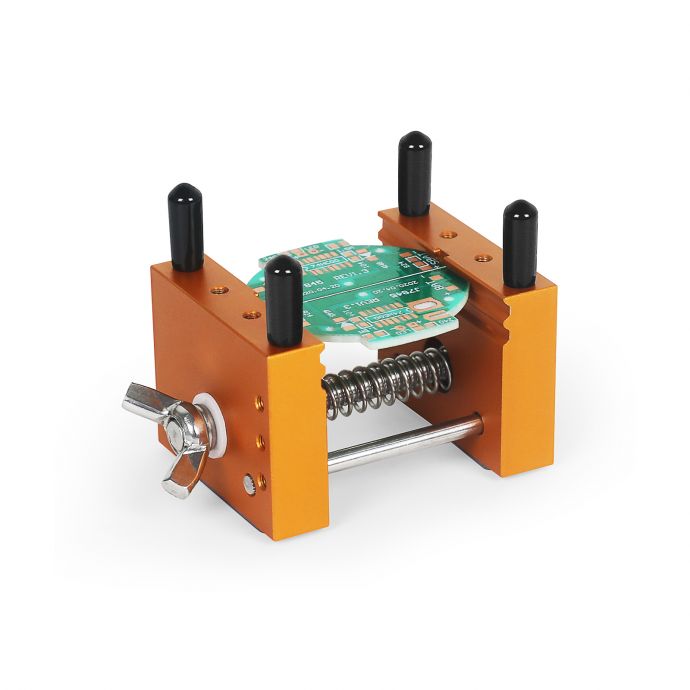
### Hold more than one connection at a time
Many projects require you to solder multiple points in close proximity. With three arms, you can secure:
- One arm for a PCB or board edge
- One arm for holding a lead or wire in alignment
- One arm for supporting the opposite side or stabilizing a smaller part
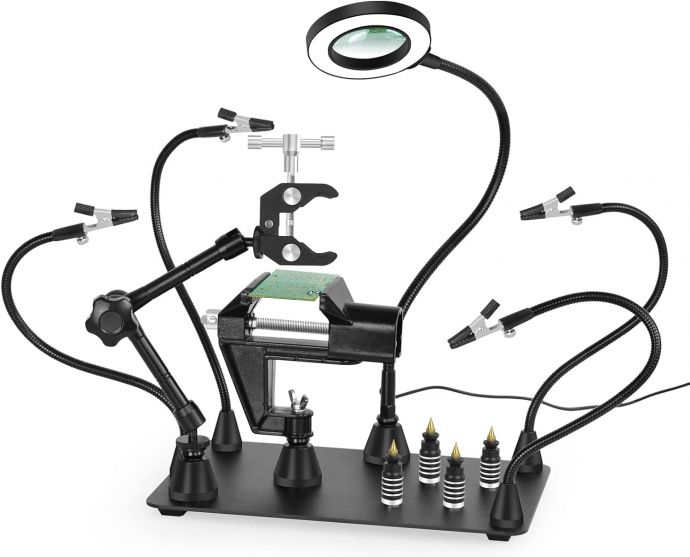
This reduces the need to “set it down and hope” between joints.
### Keep parts square and aligned
Soldering isn’t forgiving when components must sit exactly where they belong. Triple-arm holding makes it easier to maintain consistent spacing and alignment—especially on:
- header pins and connectors
- SMD-to-through-hole transitions
- delicate leads on small sensors or IC-adjacent wiring
- custom cable harness builds
When your part remains where you placed it, the solder joint forms where you intend it.
### Reduce rework caused by shifting
A common failure mode in electronics soldering is the “almost correct” joint—where the solder looks fine at first glance but the connection is weak or misaligned. Triple arms help you avoid that by keeping everything stable as you apply heat and solder.
### Support delicate repairs
Repair work often involves positioning tiny fragments, pins, or leads under magnification. Extra arms help you avoid constant repositioning and minimize stress on already-damaged pads.
In short: triple-arm precision makes your soldering workflow calmer, more deliberate, and more accurate.
---
## 2) Enhanced magnetic grip: stability that doesn’t fight you
A magnetic helping hands tool doesn’t just “hold” materials—it influences how consistent your soldering is. When a part is secure, you can apply heat and solder without competing with movement.
Magnetic grip offers several advantages over non-magnetic or weaker holding systems:
### Stronger retention for real-world work
In a typical bench setup, you deal with slight vibrations, airflow from tools, and the force of placing an iron tip or solder wire. A magnetic system with enhanced holding power helps resist those forces, keeping your board or wires from drifting.
That stability matters most when you solder:
- thin wires
- small gauge leads
- components near heat-sensitive areas
- long connectors that tend to shift under pressure
### Less clamping fiddling
Even if your clamps are theoretically secure, fiddling with them can cost time and introduce positioning errors. Better magnetic grip means you spend less time re-tightening and more time soldering cleanly.
### Improved “hands-free” repeatability
Soldering quality depends on repeating the same technique each time. When your workpiece stays in place, you can focus on consistent:
- tip contact
- solder flow and quantity
- dwell time
- joint inspection
That repeatability is a major reason why professional solderers rely on stable workholding.
### Cleaner joints with less unintended stress
When components shift, the leads can flex while you’re heating them. That stress can lift pads, crack joints, or weaken solder connections. Enhanced magnetic grip reduces the chance that your soldering action accidentally creates movement.
In effect, stronger magnets don’t just keep parts from falling—they help protect pads, wires, and alignment.
---
## 3) Adjustable angles: make every joint accessible
Even the best gripper setup can’t help if the work is awkward. Soldering requires good access to the joint so your iron tip and solder wire can meet the pad at the correct angle. Without adjustable positioning, you end up compromising technique—or you risk overheating by trying to reach a stubborn location.
Adjustable angles in a magnetic triple-arm helping hands station bring accessibility benefits that are hard to overstate:
### You can optimize approach angle for the iron
Different joints demand different tip angles. With adjustable arms, you can:
- tilt a board to minimize heat travel
- align a wire so the iron can contact the pad and lead simultaneously
- reduce the chance of knocking nearby components
### Better visibility and inspection
When your board and leads can be rotated or angled, it’s easier to see exactly where you’re soldering. That matters for:
- polarity alignment
- avoiding solder bridges
- confirming wetting and flow
- identifying underfilled or cold joints early
### Easier cleanup and rework
Need to desolder and retry? With adjustable angles, you can maneuver for:
- solder wick removal
- controlled reheating
- stable hold while you apply flux and reflow
Rework becomes less of a wrestling match and more of a controlled process.
### Works across project types
A versatile bench tool should handle everything from electronics assembly to delicate repairs. Adjustable angles help you accommodate different board sizes, wire orientations, and component geometries without constantly re-improvising.
---
## Turning your workbench into a “station,” not a temporary setup
One of the biggest improvements you’ll notice when using a magnetic triple-arm helping hands setup is that your bench stops feeling temporary. You’re no longer building a makeshift arrangement every time you solder something different.
Instead, the tool becomes a dependable station that supports your workflow:
- Set up the workpiece quickly
- Adjust the arms into position
- Solder with stable contact
- Inspect confidently
- Repeat without losing your alignment
That’s a professional mindset: repeatable setups lead to repeatable quality.
---
## Practical examples: where the 3X advantage shines
To understand why the triple-arm + magnetic + adjustable angle combo is so effective, consider a few common scenarios:
### 1) Building a small PCB with multiple through-hole components
You want the PCB stable, a component aligned, and each lead held down while you solder. Triple arms let you:
- hold the board edge
- stabilize a component
- manage the opposite lead side
You’ll spend less time correcting drift and more time producing reliable joints.
### 2) Repairing a damaged connector on a delicate board
Connector pads are often fragile. If you have to hold wires, stabilize the connector, and control the exact touch of the iron, basic clamp setups can’t always keep up. With three arms and stronger magnetic grip, you can support the connector while keeping leads in the right orientation for reattachment.
### 3) Wiring in a tight enclosure or wearable electronics project
Wearables and tight enclosures involve awkward angles, short wire runs, and compact layouts. Adjustable arms help you angle the wires and board for clean access—while the magnetic grip keeps everything from creeping as you solder.
### 4) Soldering fine wires without losing alignment
Thin wires are easy to misplace. A triple-arm setup can hold the wire end steady while you heat the pad and allow solder to flow where it should.
Less movement means fewer cold joints and less bridging cleanup.
---
## What to look for when choosing a magnetic helping hands tool
Not all magnetic helping hands tools are equal. If you’re upgrading to get that real “3X advantage,” focus on features that affect day-to-day performance:
- **True triple-arm configuration**: Three independent arms should allow different hold points at once.
- **Meaningful magnetic strength**: Enough holding force to resist pressure and prevent drift.
- **Stable base and solid joints**: Adjustment shouldn’t wobble under heat contact.
- **Smooth adjustability**: Angles should lock securely so your setup doesn’t slowly shift.
- **Comfortable