If you’ve ever completed a soldering session and afterward noticed that familiar, sharp “electronics” smell clinging to the room, you already know the problem: soldering fumes don’t just disappear because you finished the job. Even when the work looks clean, invisible byproducts can linger in the air and settle on surfaces—along with the irritation that can leave your throat scratchy, your eyes watery, and your focus scattered.
The good news? You can take control of your workspace. With a DIY smoke absorber designed specifically for soldering, you can breathe easier, protect your health, and still achieve professional-looking results. This guide walks through the “why” behind fume control and how a 6.7” DIY smoke absorber can transform your setup into a healthier, more comfortable place for crafting, repairs, and electronics work.

---
## Why soldering fumes are more than just an unpleasant smell
Soldering seems straightforward: heat the metal, melt the solder, join the components. But the process produces smoke and vapor from multiple sources, including:

- **Flux fumes**: Many fluxes contain resins and activators that release irritating vapors when heated.
- **Metal fumes and oxides**: Depending on the alloys and coatings involved, heating can create airborne particles.
- **Burn-off contaminants**: Even “clean” parts can carry residues that react under heat.
You don’t need to experience dramatic symptoms to be affected. Long exposure—even to moderate fumes—can trigger headaches, respiratory discomfort, eye irritation, and sensitivity over time. And if you solder frequently, the cumulative impact matters.
Improving ventilation is not about being overly cautious; it’s about creating consistent conditions that support both health and performance.
---
## The goal: capture fumes at the source
When people think about ventilation, they often picture moving air around the room—opening windows, running fans, or hoping the airflow “carries everything away.” That can help, but it has a major flaw: **fumes are most concentrated right where you’re working**.
A smoke absorber works differently. Instead of trying to dilute the problem in the whole room, it aims to **pull smoke away immediately** from the soldering zone. In practice, this means:
- Less visible smoke lingering in your workspace
- Reduced odor buildup
- Fewer fumes entering your breathing space
- A more pleasant environment for long sessions
A good DIY system also supports repeatability. You don’t have to “remember” to ventilate every time or adjust multiple factors. Once set up, it becomes part of your workflow.
---
## Meet your 6.7” DIY smoke absorber: a compact, practical solution
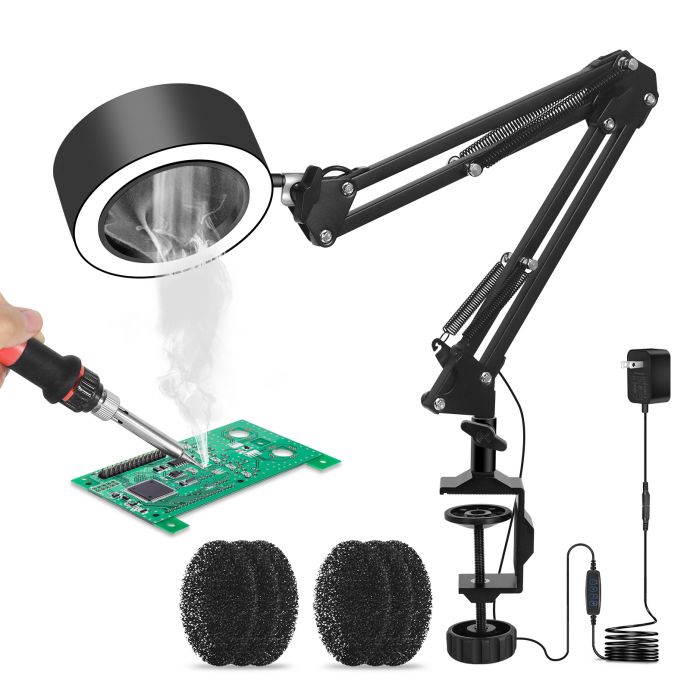
A 6.7” smoke absorber is designed to be small enough to sit comfortably on a bench without taking over your whole workspace, yet large enough to provide meaningful suction and capture for typical soldering tasks. The concept is simple: a controlled airflow path draws soldering smoke through a filter system and away from you.
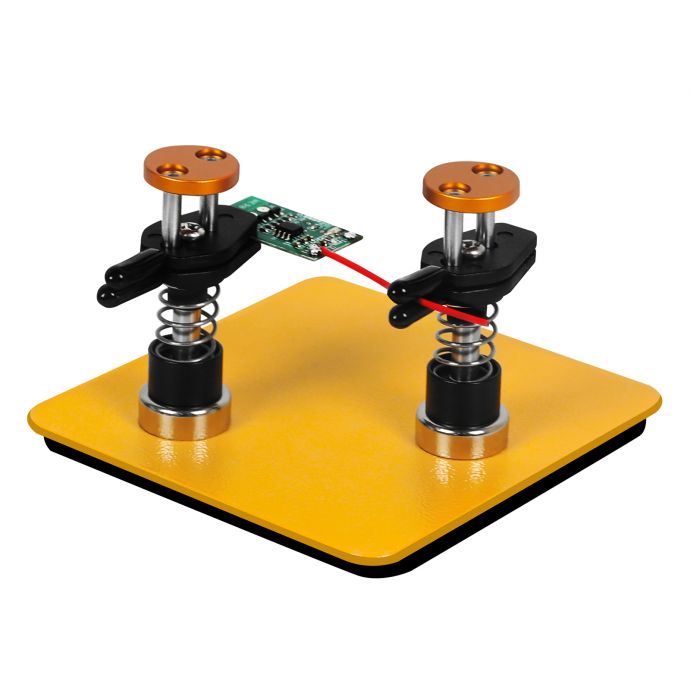
Instead of bulky industrial hoods that only some hobbyists can justify, a compact absorber is more likely to actually get used. And that matters—because the best fume control solution is the one you’ll use consistently.
While the exact performance depends on your build quality, fan choice, and filter setup, the advantages of a compact absorber generally include:
- **Better source capture** than relying solely on room ventilation
- **More stable working environment**—less odor, less irritation
- **Space-friendly design** for home benches and makerspaces
- **Support for professional results**, since you can work longer with less discomfort
---
## How to build an effective smoke absorber (without making it complicated)
There are many ways to DIY a smoke absorber, but effective systems share a few core principles. Think of it as engineering a “fume funnel” that moves smoke where it needs to go—toward filtration and away from your breathing zone.
### 1) Choose an airflow path that’s close to your work
The absorber’s opening should be positioned near where soldering happens. If it’s too far away, you’ll pull much less smoke. Aim for an arrangement that lets you keep your hands steady and your components accessible while the intake remains close to the solder joint.
A 6.7” design is typically easier to position without obstructing tools. You want your setup to feel intuitive, not like a wrestling match with your equipment.
### 2) Use proper filtration (don’t skip this)
Solder smoke isn’t just “air smell.” It may contain fine particles and combustion byproducts. Ideally, your build includes:
- **A pre-filter** to catch larger particles (often helps extend the life of downstream filters)
- **A fine filter** for particulate capture
- Optional media depending on your flux and solder type (some users add carbon layers for odor control)
The best choice depends on your materials. If you primarily use rosin flux, odor and irritants are typically a major concern; if you work with different flux types or coated metals, particulate control becomes even more important.
### 3) Ensure the fan is capable of pulling air reliably
Suction strength is what makes source capture effective. A DIY absorber should not rely on weak airflow. However, stronger suction can also increase noise and reduce comfort if not managed. The goal is a balance: enough airflow to pull fumes quickly at the work zone.
Consider your fan selection carefully, and make sure the system is sealed where needed so suction doesn’t leak.
### 4) Build it for comfort and consistency
A fume absorber that’s constantly shifting, wobbling, or difficult to align will frustrate you—and once frustration sets in, it gets turned off or ignored. Prioritize:
- Stable placement on your bench
- Flexible intake positioning (if your design includes a movable nozzle)
- Clear setup so you can start using it in seconds
### 5) Keep maintenance simple
Filters clog over time. If replacing filters is inconvenient, you’ll delay maintenance until the performance drops. Build with access in mind:
- Easy-to-open filter housings
- Clear guidance on when to replace components
- A system that you can quickly inspect
A professional approach to health and performance includes maintenance habits.
---
## Where to place the absorber for maximum benefit
Placement is everything. Even a strong absorber can underperform if positioned poorly. Here are practical placement strategies:
- **Centerline near the soldering iron tip**: The intake should sit close to the area where smoke rises.
- **Angle the airflow** so smoke naturally moves toward the intake rather than escaping upward.
- **Avoid blocking airflow pathways**: Tools, lighting, and component trays can accidentally interrupt the capture zone.
- **Work with your tool setup**: If you use a soldering stand, position the absorber so the stand’s position doesn’t force smoke away from the intake.
A good trick is to do a “dry test” after setup: run a brief soldering session and watch whether the smoke moves toward the absorber quickly. If it drifts elsewhere, adjust the intake distance or angle.
---
## Healthier crafting: more focus, fewer irritations
A reliable fume absorber changes the feel of your workspace. Instead of taking breaks to clear your eyes or soothe a throat, you can maintain a steady rhythm. That matters not only for comfort but also for quality.
When you’re irritated, you make more mistakes:
- Your hands may tense
- Your posture may change
- You might rush the last joints
- Your tolerance for careful alignment drops
By reducing inhalation exposure and odor buildup, a smoke absorber supports calmer, more precise work—especially during longer projects such as:
- PCB repairs
- Cable harness soldering
- Through-hole buildouts
- DIY electronics, robotics, and prototypes
- Small metal assemblies using soldered joints
---
## Better results: fume control pairs with good soldering habits
It’s important to note: a smoke absorber doesn’t replace good soldering practices. But it complements them. When you can work comfortably, you’re more likely to:
- Maintain correct tip temperature
- Use flux appropriately (not excessively, but effectively)
- Keep the work area organized and clean
- Focus on joint quality rather than breathing discomfort
In other words, cleaner air can indirectly support better soldering outcomes by improving your consistency.
And if you’re the type who takes pride in professional finishing—neat joints, consistent solder fillets, tidy wiring—then having an environment that doesn’t distract you will help you get there.
---
## A workflow that feels natural: integrating the absorber into your bench routine
To make sure the system truly improves your life, integrate it into your routine instead of treating it like an occasional experiment.
Consider this simple workflow:
1. **Turn on the absorber** before you heat the iron.
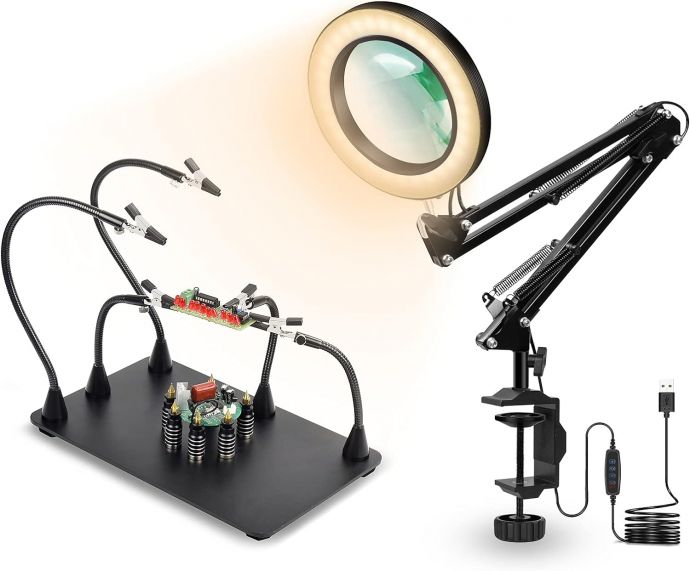
2. **Set your workstation**: lighting, magnification, solder wire, flux, and tools ready.
3. **Start soldering** with the intake positioned near your work.
4. **Pause briefly** after complex joints to allow lingering smoke to clear.
5. **Check filters** on a scheduled basis so performance stays stable.
With this approach, you get dependable fume control without interrupting your momentum.
---
## Common questions and practical tips
### “Do I still need ventilation if I use a smoke absorber?”
A smoke absorber significantly reduces fume exposure at the source, but it doesn’t eliminate the need for general good ventilation. Think of it as **primary control** for your breathing zone, plus additional room airflow for safety and comfort.
### “Will it interfere with precision work?”
A well-designed compact absorber should support precision rather than obstruct it. Keep your intake close but not in your way. If it blocks visibility, adjust angle or position so your view remains clear.
### “How do I know it’s working?”
You’ll notice reduced smoke in the air around your face and less odor lingering. For a more objective check, compare smoke behavior between sessions: if the absorber pulls fumes quickly, you’re capturing effectively.