Few tasks in the world of electronics combine the thrill of creativity with the potential for frustration quite like soldering. Meticulous, demanding, and often requiring the coordination of multiple components and tools, soldering can feel like a battle between human limitations and technical ambition. For generations, DIYers and professionals alike have turned to the classic two-handed "helping hands" tool—usually a couple of adjustable alligator clips on a weighted base—to steady their work. Helpful in theory, these traditional helpers often lack the versatility, strength, and adaptability needed to tackle complex, modern electronics projects.
Enter a new era with the advent of Magnetic Helping Hands Third Hand systems. With innovation at their core, these advanced tools transcend the constraints of their forebears, offering users extra-large precision and unparalleled support. Designed to multiply your capabilities and streamline intricate assembly, they promise to transform any soldering workstation into a professional-grade electronics lab.
## The Growing Demands of Modern Soldering
As electronics have advanced, so too has the complexity of assembly and repair. Surface-mount devices, multi-layer circuit boards, and miniaturized components are now the norm. Whether you’re building a quadcopter, repairing a smartphone, or prototyping IoT devices, precision isn’t just helpful—it’s critical.
Traditional helping hands struggle in these environments. Their fixed clips and rigid arms can obstruct your workspace, lack the needed dexterity, or, worse, damage sensitive components. Additionally, these tools plant you in a "one-size-fits-all" workflow, often forcing awkward angles that compromise the accuracy of your solder joints and slow your progress.
## Understanding Magnetic Helping Hands Third Hand Tools
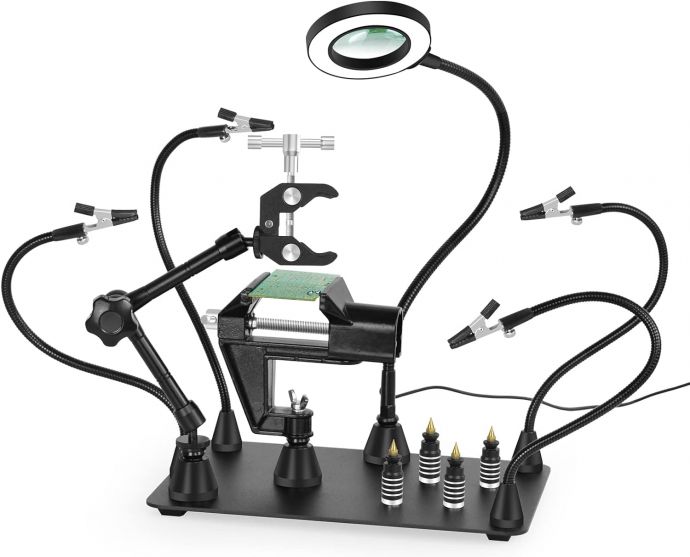
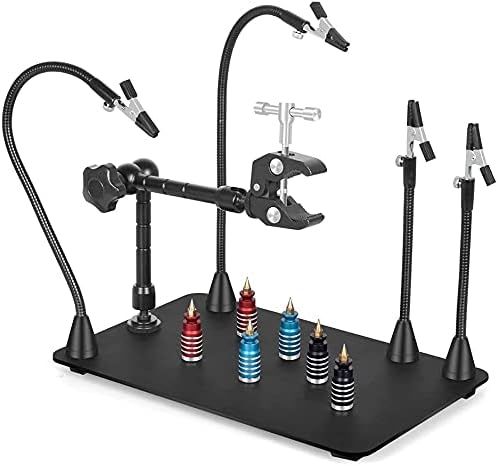
A leap forward in workshop innovation, magnetic third hand systems replace inflexible clamps and arms with magnetic bases and flexible metal goosenecks, each tipped with a precise alligator clip or specialized soldering accessory. Here’s how these cutting-edge tools work and why they outclass the old model:
### Modular Magnetic Bases
Each arm in a magnetic helping hand system is attached to a powerful neodymium magnet. This allows you to anchor each "hand" anywhere on a heavy steel base plate. Need an extra "finger" near a tiny resistor? Just move an arm there. Stacking several wires for a complicated joint? Position each arm precisely and let magnetism do the holding. These robust magnets won’t slip, even when holding larger PCBs or heavier assemblies, providing rock-steady support through the most delicate procedures.
### Fully Adjustable, Flexible Arms
Unlike the rigid, awkward arms of old, each gooseneck is crafted from flexible metal—holding any shape you bend it into and staying in position until you want to adjust. This allows you to create the perfect holding pattern for any board, component, or wire configuration. Have to support something in mid-air? Need to hold the board vertically? The magnetic third hand lets you do both with ease.
### Specialized End Attachments
The best systems offer an array of end attachments: fine-tipped alligator clips, heat-resistant silicone covers, PCB edge grips, or mini-vices. Each is designed to handle different materials without marring, scratching, or conducting unwanted current. This level of adaptability makes a world of difference when working with fragile modern electronics, painted enclosures, or insulated wiring.
## How Magnetic Helping Hands Boost Soldering Precision
### Multiply Your Dexterity—Beyond Two Hands
The inherent limitation of human anatomy is obvious: we have only two hands, and they’re rarely enough for complex electronics work. Magnetic helping hands let you set up as many supports as needed. Imagine assembling a tricky array of SMD LEDs on one compact PCB. With classic helping hands, you’re forced to juggle everything at once; with a magnetic third hand, each LED can be held exactly as needed—freeing your two real hands for the soldering iron and wire.
The result is cleaner solders, fewer mistakes, and a faster workflow. You can finally tackle assemblies that would be impossible unaided, all with professional-level confidence.
### Reduce Errors and Accidents
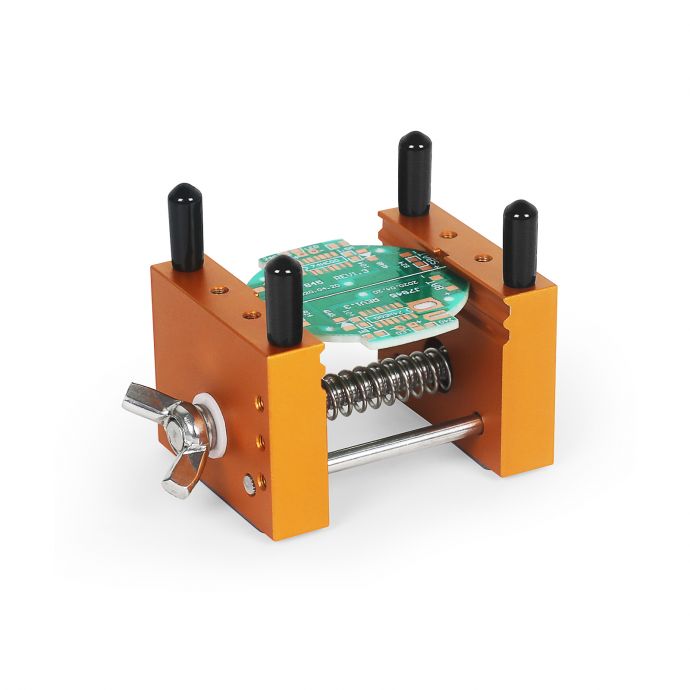
Fumbling with awkward helping hand clamps or trying to balance boards on makeshift stands is a recipe for dropped components, scorched fingers, and misplaced solder blobs. The magnetic system’s stability and custom positioning all but eliminate human error and prevent accidents. This means better joints, less rework, and a safer work environment.
Additionally, less physical strain (from awkward hand positions or the need to hold parts for extended periods) reduces fatigue, allowing for longer, more productive work sessions.
### Improve Workspace Organization
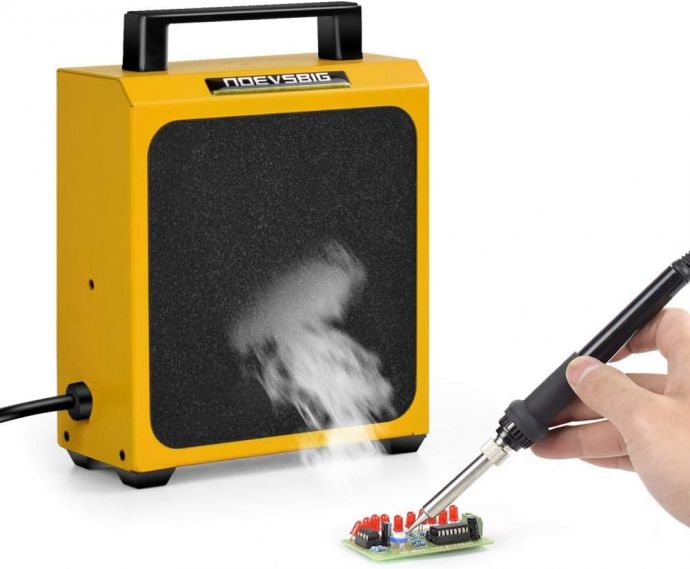
With traditional helping hands, the workspace often feels cramped or chaotic. Jumbling to fit everything within a fixed, small area can result in tangled wires or components knocking against each other. Magnetic third hand tools, however, provide a broad, heavy steel base that serves as both foundation and organization aid. Between the flexible positioning of each arm and the open work area, your projects stay tidy and accessible from all angles.
Some high-end bases even come with built-in trays for screws, or pads for holding flux, so everything has its place. Keeping your workspace organized helps maintain focus and reduces frustration—key ingredients for intricate soldering success.
### Accommodate Larger or Multi-Part Assemblies
Traditional helping hands falter on large projects: big PCBs tip them over, and their reach is too short for expansive tasks. Magnetic helping hands third hand systems, on the other hand, excel at scale. The heavy steel base and powerful magnets allow multiple large, robust arms to be positioned anywhere, anchoring oversized boards, multiple subassemblies, or even enclosures mid-build.
For advanced makers, this means reliably soldering custom keyboards, drone assemblies, or audio gear without mishaps. Professional repair technicians can even stabilize smartphones, tablets, or other consumer electronics for precision diagnostics and micro-soldering.
## Game-Changing Features of the Best Magnetic Third Hand Tools
When evaluating magnetic helping hands tools, consider these advanced features that set top-tier models apart:
**1. Multiple Arm Options:**
Kits with 4–8 arms allow you to configure your station perfectly for any project. More arms means more simultaneous support points for complex tasks.
**2. High-Quality Magnets:**
Look for rare-earth (neodymium) magnets with a tested holding force. Cheaper alternatives may slide or shift under load.
**3. Heavy, Stable Base:**
A solid steel base not only anchors the arms but also resists tipping or accidental movement. Some bases offer modularity, such as the ability to connect several base plates for truly extra-large projects.
**4. Specialized Clips & Accessories:**
Soft silicone covers, ESD-safe clips, and add-ons like magnifiers or LED lighting maximize utility and safety, allowing you to work confidently with ultra-sensitive components.
**5. Easy Setup and Breakdown:**
Modular arms and magnets should be quick to reposition and store, streamlining your workflow and saving bench real estate when not in use.
**6. Expandability:**
Some systems offer aftermarket or DIY add-ons—such as extra-long arms, custom-jig appendages, or interlocking base plates—enabling infinite workstation upgrades as your projects and skills expand.
## Real-World Impact: Master Complex Projects with Ease
Imagine you’re repairing a dense smartphone motherboard. With four or more magnetic helping hands, one supports the board, another lifts a heat shield, a third secures a replacement connector in perfect alignment, while a fourth holds your desoldering braid at the ready. Suddenly, what would require an assistant—or a third and fourth hand—becomes a solo, stress-free operation.
Or consider building a DIY mechanical keyboard. With multiple arms holding switches, the PCB, and the case all at precisely the correct locations, you’re free to solder every joint perfectly, swap components mid-build, and troubleshoot any issue without wrestling with shaky supports.
In a makerspace or classroom, these tools also level the playing field—allowing novices to attempt ambitious projects with the confidence of pros. In business, they increase productivity and throughput, letting a single technician accomplish tasks that would otherwise require two or more staff to complete efficiently.
## Getting Started: Choosing and Using Magnetic Helping Hands
Ready to supercharge your soldering station? Here’s how to get started:
**Assess Your Projects:**
Do you mostly repair small electronics, tackle large-scale assemblies, or a mix? Choose a system with enough arms and a large enough base for your common tasks.
**Budget for Quality:**
Investing in a durable, high-quality system pays dividends in performance and lifespan. Look for reputable brands, solid construction, and strong user reviews.
**Personalize Your Setup:**
Experiment with arm positioning, clip types, and accessories to suit your workflow. Many users develop their own custom attachments for specialized needs—don’t be afraid to modify or expand your system.
**Maintenance:**
Wipe down the base and arms regularly to prevent buildup of solder and flux, and check magnets for wear. Replace silicone covers as needed to keep a gentle grip on sensitive components.
**Practice Makes Perfect:**
Try setting up a few test boards or practice projects to become familiar with positioning, adjustments, and workspace optimization. The more you use your magnetic helping hands system, the more second-nature it becomes.
## The Future Is in Your Hands—And Beyond
The leap from basic helping hands to a magnetic third hand system is transformative. As electronics continue to shrink and projects become ever more sophisticated, these innovative tools empower makers, educators, and professionals to tackle any soldering challenge with precision and efficiency. They multiply your capabilities—turning daunting assemblies into manageable, even enjoyable, tasks.
With modular magnetic helping hands, your two hands are no longer a limitation. Welcome to the future of soldering, where mastery comes standard, and every project is within your grasp.