When it comes to soldering, whether you’re assembling a quick electronics project or working on intricate circuit board repairs, there’s an often-overlooked hazard: solder fumes. These smoky emissions are more than uncomfortable; they contain flux vapors and microscopic particulates that can irritate your eyes, throat, and lungs with prolonged exposure. Thankfully, you don’t have to resign yourself to breathing in these harmful fumes—or spend a fortune on commercial extraction systems. This detailed guide will show you how to build your own powerful, budget-friendly 12V DIY solder fume extractor: an essential addition to any modern maker’s soldering station.
## Why Solder Fume Extraction Matters
Solder fumes are generated when rosin-based fluxes—used to clean and prepare surfaces for soldering—are heated. The resulting smoke can cause respiratory irritation and has been linked to long-term health concerns. Even if you only solder occasionally, it pays to invest in clean air solutions. Fume extractors keep your lungs healthy, your workspace air fresh, and help you focus on your craft instead of coughing. For hobbyists and professionals alike, a reliable fume absorber is non-negotiable.
## The Case for DIY: Benefits and Versatility
Commercial fume extractors can be expensive and sometimes overkill for a home workstation. DIY designs offer flexibility, customization, and cost savings—letting you tailor the performance, size, and aesthetics to exactly what you need. Building your own extractor means you control the suction power, the type of filters used, and how easily you can maintain or expand the unit.
A 12-volt system is particularly appealing—it’s quiet, efficient, compact, and compatible with common power supplies. You can run it off a dedicated 12V wall adapter, a bench power supply, or even a battery pack if portability is needed.
## How It Works: Fan-Based Fume Extraction
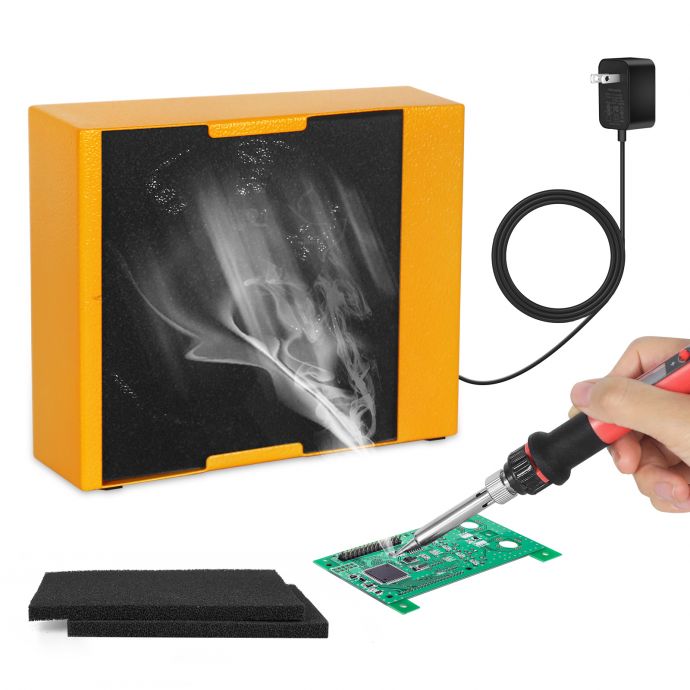
At the heart of this solder smoke absorber is a high-quality 12V DC fan. The fan generates a directed airflow, pulling solder fumes away from the work surface and through a specialized filter that traps harmful particles and absorbs volatile organic compounds. The result is cleaner, safer air—without the bulk or noise of industrial machines.
### Materials That Make a Difference
A simple yet effective fume extractor includes:
- **12V DC fan:** Ideally 120mm or larger, rated for at least 40–60 CFM (cubic feet per minute) airflow.
- **Fan guard or grill:** Prevents accidental contact with spinning blades.
- **Activated carbon filter:** The critical component for absorbing fumes; easily sourced as air purifier replacements or made from aquarium-grade carbon pads.
- **Housing/enclosure:** Can be 3D printed, purchased, or repurposed from old electronics.
- **12V power supply:** Wall adapters are readily available and safe.
- **Switch (optional):** For conveniently powering the fan on and off.
- **Wire, connectors, and basic tools:** For easy assembly.
With these parts, you can build a professional-grade extractor that rivals commercial units costing ten times more.
---
## Step-By-Step: Building Your Ultimate DIY Solder Fume Extractor
### 1. Select and Prepare the Fan
Start with a quality 12V DC fan. Computer case fans are ideal—they're reliable, quiet, and available in various sizes. A 120mm fan is recommended, but you could use larger or dual fans for greater suction.
- **Tip:** Check the airflow rating (CFM). For small workspaces, 40–60 CFM is ample. For multiple soldering points or ongoing production work, consider more airflow.
Cut the wires to manageable lengths (about 20 cm), strip the ends, and label positive and negative leads.
### 2. Assemble the Housing
You want the airflow to pass straight through the filter without leaks. There are several easy housing solutions:
- **3D Print:** Many open-source designs can be found on sites like Thingiverse.
- **Repurpose:** Old project boxes, food containers, or even small desktop speakers can be modified.
- **Custom Build:** Create a frame from MDF, acrylic, or sturdy cardboard.
Make sure one side can securely hold the fan, and the opposite side has open space for mounting your activated carbon filter.
### 3. Install the Activated Carbon Filter
The filter is the heart of the extractor’s effectiveness. Activated carbon is especially excellent for capturing the volatile organic compounds and odors present in flux smoke.
- **Ready-made filters:** Purchase 120mm x 120mm carbon sheets or air purifier replacements. Trim to fit using scissors.
- **DIY solution:** Buy aquarium-grade activated carbon pads and cut them to size.
Secure the filter on the **intake side** of the fan, so air is pulled through the filter before it reaches the fan blades. You can use a simple filter frame, a removable slot, or even sandwich the filter between layers of mesh for easy replacement.
### 4. Electrical Connections
Connect the fan wires to your 12V power adapter. You can use crimp connectors, solder and heat-shrink tubing, or terminal blocks for a safe and tidy job.
- **Add a switch:** Insert a toggle or rocker switch along the positive (red) wire if you want on/off control.
- **Test the polarity:** Briefly connect the wires before final assembly to make sure the fan spins and draws air through the filter.
### 5. Final Assembly and Safety Touches
Place a fan guard on the exposed side to keep fingers and foreign objects safe. Double-check all wiring and ensure the housing fits snugly, leaving no gaps for fumes to bypass the filter.
Secure all components—hot glue, screws, or double-sided tape work well for most housings.
## Enhancements and Customizations
Once you’ve built the basic system, you can upgrade your fume extractor with useful features:
- **Variable speed control:** Use a simple PWM dimmer to adjust suction strength for quiet operation during prolonged tasks.
- **Replaceable filter slots:** Make the filter easily removable, so you can swap in a fresh pad in seconds.
- **Articulated arms:** Mount the entire unit on a flexible “third hand” arm or a small tripod to position it close to your work.
- **Integrated lighting:** Add an LED strip inside to illuminate your workspace while you solder.
- **HEPA pre-filter:** For ultra-fine particulate capture, sandwich a thin HEPA layer before the carbon filter.
## Maintenance and Best Practices
Activated carbon filters don’t last forever; they become saturated with fumes and lose effectiveness over time. The replacement interval depends on usage frequency, but as a rule of thumb:
- Change the filter every 1–3 months for hobby use.
- For commercial or daily work, check and replace monthly.
- Watch for reduced smoke capture or lingering odors—the filter is likely spent.
Keep the fan blades dust-free and check electrical connections regularly. With these simple steps, your DIY extractor will provide years of reliable service.
## FAQs: Solder Fume Extraction Demystified
**Q: Can a simple desk fan replace a fume extractor?**
A: No. Desk fans only disperse fumes around your room; they don’t capture or filter harmful particles. A fume extractor actively pulls air through a filter, removing the toxic components from your workspace.
**Q: How much suction is enough?**
A: Sufficient suction means smoke is visibly drawn toward and through the filter, not allowed to drift sideways or upwards. Position the extractor within 10–20 cm (4–8 inches) of your soldering point for best results.
**Q: Are carbon filters safe to handle?**
A: Yes, but wash your hands after changing saturated filters, as they’ll trap particles and chemicals.
**Q: Can I power the extractor from my bench PSU?**
A: Absolutely! A 12V output works perfectly. For battery operation, monitor the fan’s current draw for safe runtime.
**Q: How do I dispose of used filters?**
A: Treat as household waste, but check local recycling for carbon materials if available.
## Conclusion: Clean Air Is Just One DIY Away
Your health is your most valuable tool, and investing in a solder fume extractor is one of the best decisions you can make as an electronics enthusiast. With a DIY 12V fan-based solution, you get:
- Affordable, reliable fume extraction
- Custom-built performance and appearance
- The satisfaction of building your own professional-grade equipment
Not only does this extractor protect your lungs and create a more comfortable workspace, but it also reflects the ingenuity at the heart of the maker community. Clean air, better focus, and more enjoyable soldering sessions are just a weekend project away. So gather your parts, fire up your creativity, and breathe easy—because your next project just got a whole lot safer.