When you’re working with intricate electronics, soldering delicate PCB components, or crafting a one-of-a-kind piece of jewelry, the saying “two hands are never enough” rings all too true. The demand for precise control and stability is relentless. Any slip or misalignment can spell disaster—ruined components, wasted materials, and hours of frustration. Enter the next evolution in workspace mastery: magnetic helping hands. These clever devices are quietly triggering a revolution across workbenches everywhere, transforming how professionals and hobbyists alike approach precision work.
### The Age-Old Struggle: Why Third Hands Matter
Whether you’re soldering wires or setting a minuscule gemstone, the basic problem persists: you need to hold your piece steady—sometimes at odd angles—while keeping your tools in motion. Traditional “helping hands” have served as the unsung heroes for decades. They typically consist of a base, two or more adjustable arms with alligator clips, and a magnifier. If you’ve used one, you know their strengths…and their shortcomings.
Stiff, hard-to-position arms. Limited reach. Bases that slide around just when you need them most. If you wanted to work on a larger project or needed finer control, the tool itself sometimes became your greatest limitation. The world needed something better.
### The Magnetic Leap Forward
Magnetic helping hands bring a fresh approach to the age-old workbench conundrum. Instead of being restricted by fixed arms stemming from a single base, these systems feature strong, individual magnetic bases and fully adjustable, modular arms. The magnets allow users to “drop” support arms anywhere on a ferrous work surface, adjusting their position and angle in moments, unhindered by pre-set positions.
This seemingly simple change triggers an exponential leap in utility and ergonomics:
- **Unlimited Positioning:** Place magnetic arms anywhere. Surround your work from any angle, supporting, gripping, or pointing exactly where you need.
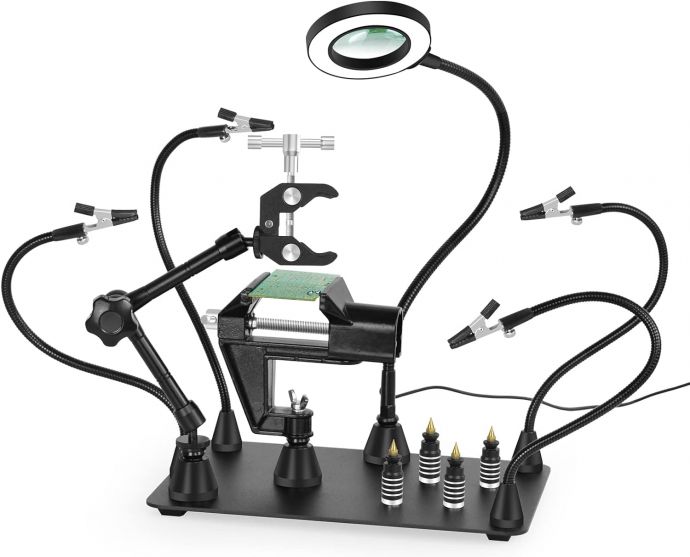
- **Rock-Solid Stability:** Rare-earth magnets provide a vice-like hold to steel and iron surfaces—your components stay put, even under the pressure of soldering or filing.
- **Expandability:** Add as many helping hands as you want. Each arm acts as an independent support. No more wrestling three components into two fixed clamps.
- **Clutter-Free Workspace:** When you don’t need an arm, remove it. Your workspace remains clear and fully customizable.
### Anatomy of a Magnetic Helping Hand
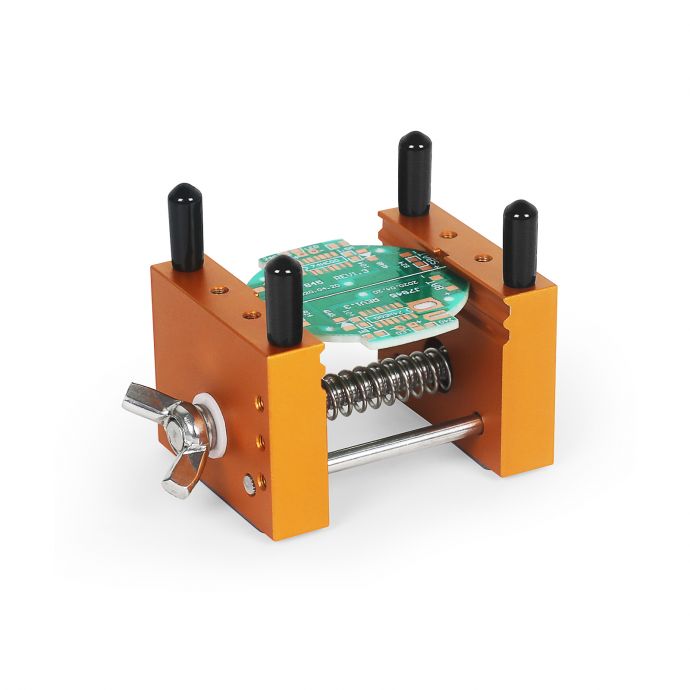
Let’s break down what makes these tools tick:
#### 1. Magnetic Base
The heart of the system. Today’s best helping hands use neodymium magnets, which are compact yet impressively strong. Many bases are rubber-coated to prevent marring delicate surfaces and to add grip. Some even have switchable magnets, letting you easily reposition them without effort.
#### 2. Articulated Arms
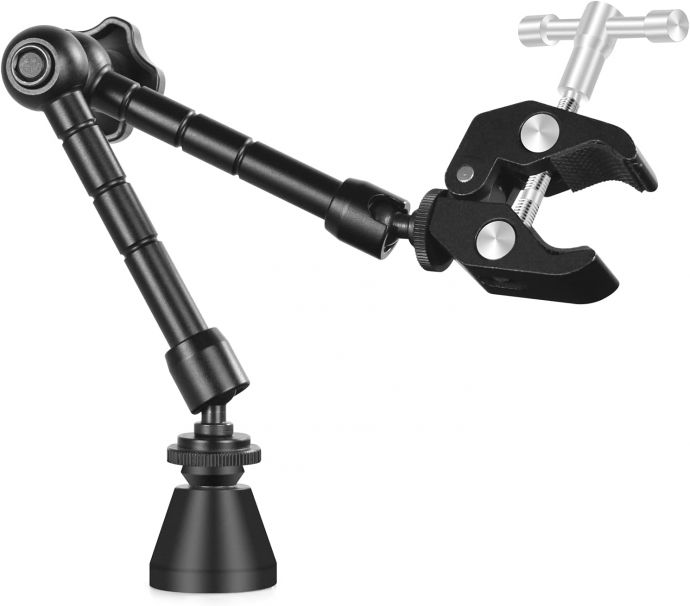
Modern helping hands use “gooseneck” or ball-and-socket style arms. Goosenecks offer flexibility with mid-range rigidity, perfect for positioning wires and jewelry components. Ball-and-socket designs offer even finer control, able to lock in place at precise angles—vital for holding SMD components or aligning tiny jump rings.
#### 3. Tool Attachments
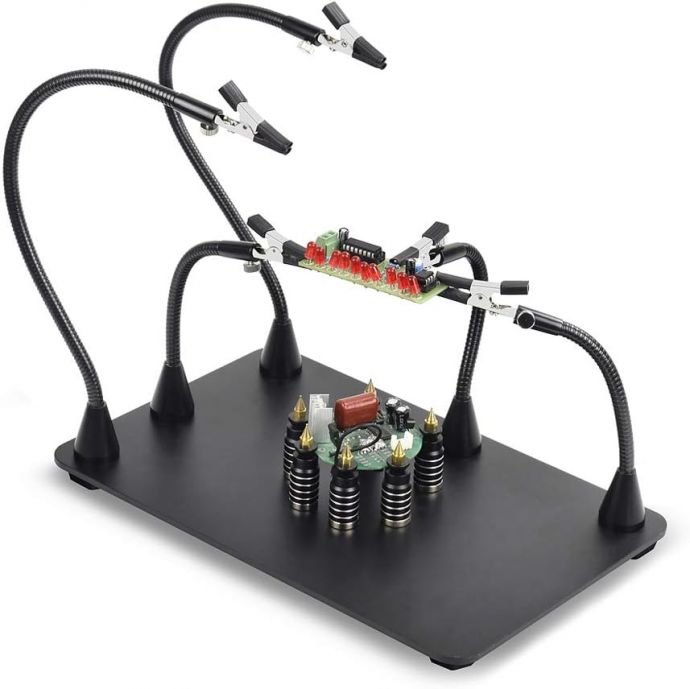
It’s not just about holding. Many systems offer a range of interchangeable attachments: alligator clips for wires, soft-tipped clamps for jewelry, micro-vices, tweezers, and even soldering-iron rests or mini LED lamps.
#### 4. Modular Design
Everything is modular. You can move, remove, or add arms as needed. Parts are often swappable—giving you the freedom to evolve your setup over time to meet new project challenges.
### Game-Changing Benefits for Electronics
#### Soldering Simplified
Gone are the days of balancing your PCB in one clamp, your component in another, and your soldering iron in a third. With magnetic helping hands, you can surround your workpiece with multiple arms, each holding a wire, a connector, or providing strain relief during the soldering process. The iron stays hot, your hands stay cool, and your solder joints improve. The risk of burnt fingers—or worse, ruined components—plummets.
#### Surface-Mount Dexterity
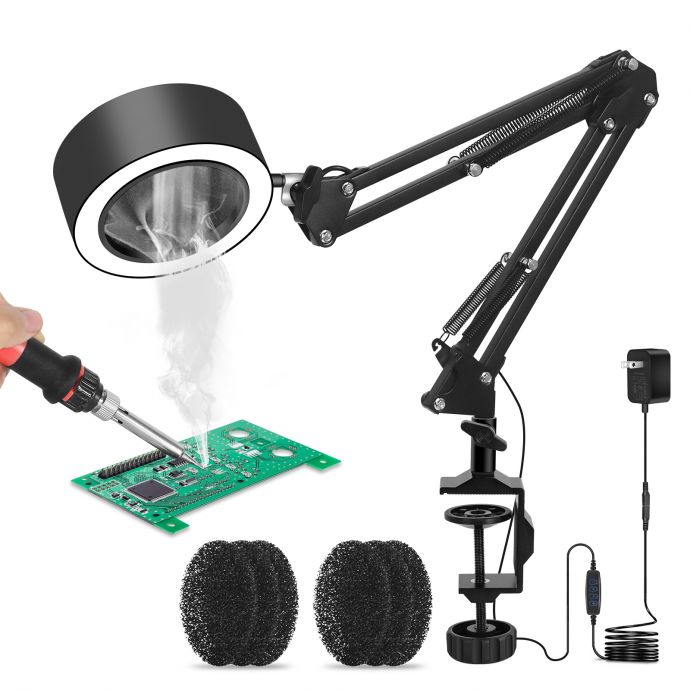
Surface-mount components get smaller every year, testing the patience of even the steadiest hands. With magnetic arms, you can anchor tiny capacitors, resistors, or ICs, holding them precisely in place while your iron or hot-air station works its magic. Attach a magnifier for detail work, or an LED lamp to banish workspace shadows instantly.
#### Troubleshooting and Probing
Ever tried to measure voltage at awkward points on a circuit board? With traditional helping hands, moving probes or test leads without disturbing the setup was a nerve-wracking challenge. Magnet-based arms can hold multimeter probes precisely where you want, freeing you to operate switches or make measurements without a third hand (or a second person).
### Precision Support in Jewelry Making
#### Stone Setting and Soldering
Setting fine stones or soldering delicate jump rings is a dance of patience and control. Traditional clamps often mar soft metals or leave you wishing for another arm. Magnetic helping hands enter as skilled assistants: soft-tip clamps grip without scratching, and directed arms hold pieces in place for torch work. Expand your setup to hold multiple elements during assembly or chainmaking.
#### Artistry, Unhindered
Complex jewelry designs may require multiple support points that move in harmony with your creative process. Modular magnetic arms can be added as needed, then removed at a moment’s notice to keep your space uncluttered. Attach magnifiers or lights to perfect your detail work.
#### Mixed-Media Mastery
If you’re incorporating electronics into jewelry (think LED-embedded pieces or kinetic elements), these systems truly shine. Hold wires, beads, and circuit parts simultaneously, bridging the gap between tech and art.
### Beyond the Bench: Other Creative Uses
While electronics and jewelry are the prime stage for the magnetic helping hand revolution, the potential applications are limited only by imagination:
- **Scale Modeling:** Hold painted parts for drying, steady tricky glue-ups, or position decals at precise angles.
- **Fly Tying:** Anglers can support feathers and hooks just where needed during the meticulous tying process.
- **Photography:** Use magnetic arms to hold reflectors, filters, or small objects in macro photography.
- **DIY Repairs:** Secure awkward objects for gluing, drilling, or filing around the house.
### Choosing the Right System: Key Features to Watch For
Not all magnetic helping hands are created equal. When shopping or building your own setup, consider:
- **Base Strength and Quality:** Strong, reliable magnets are essential. Weak bases slip, while quality magnets hold firm.
- **Arm Flexibility and Rigidity:** Goosenecks for flexibility; ball-and-socket for precision. Consider what your projects demand most.
- **Attachment Versatility:** Look for systems with a range of clamps, vices, lights, and probe holders. Do you mostly solder? Or work with fragile jewelry?
- **Modularity and Expandability:** The ability to add arms or swap attachments as you grow as a maker is vital for a future-proof setup.
- **Surface Compatibility:** Ensure your bench is metal or has a steel plate where magnets can grip—or invest in a portable steel “work mat.”
- **Build Quality:** Metal parts last longer than plastic. Soft coverings help prevent damage.
### Pro Tips for Getting the Most Out of Magnetic Helping Hands
1. **Designate a Work Surface:** If your current bench isn’t magnetic, consider a steel plate insert or a toolbox top. There are also aftermarket steel mats designed specifically for magnetic helping hands.
2. **Mix and Match Arms:** Combine arms of different lengths or styles. Short, rigid arms are great for holding small, heavy objects; longer goosenecks excel at reaching around large projects.
3. **Upgrade Your Clips:** Swap out generic alligator clips for cushioned jewelry clamps, or add heat-resistant silicone covers for electronics work.
4. **Think Vertically:** Don’t just position arms horizontally—use vertical arrangements to hold lights or magnifiers above your work.
5. **Quick-Change Organization:** Store your arms, clips, and attachments on a magnetic tool strip when not in use for easy access.
### The Future: Smart Helping Hands and Automation
The evolution isn’t over. Some companies have begun integrating sensors and Bluetooth control, allowing users to adjust arms remotely or even record/repeat common positions for repetitive assembly work. Imagine a workbench assistant that learns your habits and anticipates your next move. The future is bright—and extremely precise.
### Why Precision Matters
In both electronics and jewelry, the margin for error is vanishingly small. A shaky solder joint can kill a circuit; a misaligned gemstone can ruin an intricate design. The right tools don’t just make work easier—they make it reliably better.
Magnetic helping hands are more than just a convenience; they are a portal to higher craftsmanship, reducing fatigue, minimizing mistakes, and empowering creators to push the boundaries of what’s possible.
### Conclusion: A New Era for Makers
As the lines between technology, art, and craft blur, the necessity for tools providing uncompromising precision only grows. Magnetic helping hands exemplify how a simple innovation—rooted in magnets and modularity—can trigger a quiet revolution at the workbench. Whether you’re soldering a microcontroller, setting a sapphire, or weaving wire into wearable electronics, these agile assistants let you shape your vision with confidence. Two hands are good. But with magnetic helping hands, you truly can unleash precision—one arm at a time.