Precision soldering is one of those crafts where tiny improvements can make a huge difference. A stable work surface can be the difference between a clean, reliable connection and an intermittent failure that only shows up after the device ships, gets installed, or heats up in operation. Yet many soldering workflows still rely on constraints that were designed for earlier generations of electronics: smaller components, thicker leads, simpler geometries, and workholding tools that were never meant to handle today’s dense, mixed-technology boards.
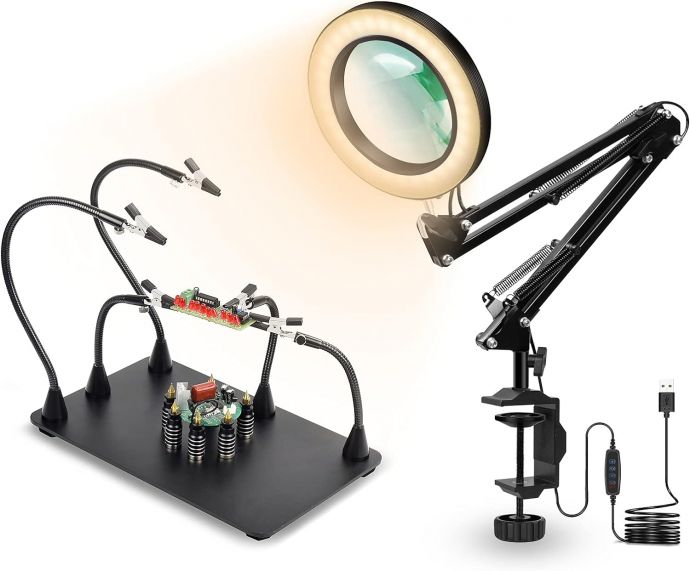
Magnetic helping hands third hand work stations have emerged as a practical answer to this challenge—especially models engineered around extra-large stability. By combining strong magnetic clamping, adjustable arms, and purpose-built positioning, these stations reduce wobble, minimize unwanted drift, and make it easier to hold parts exactly where they need to be. The result is a soldering experience that feels more controlled, repeatable, and scalable—from hobby repairs to serious prototyping.
## Why Stability Matters More Than People Think
A solder joint forms when heat is transferred to metal surfaces and the molten solder flows via wetting and capillary action. In an ideal world, the component leads, the pads, and the solder all align perfectly—then the iron tip touches the joint for the right duration.
In real work, stability issues introduce variables:
- **Micro-movement of the part**: Even slight shifts while heating can disturb wetting, create cold joints, or increase the chance of bridging.
- **Inconsistent angle**: If the component rotates or the leads flex, you end up “chasing” the correct tip contact point.
- **Lead tension and spring-back**: Wires and small leads can move when you apply pressure with a soldering iron, especially if they aren’t firmly supported.
- **Board flex**: On larger or thinner assemblies, pressure from tools can bow the PCB, pulling pads out of alignment.
The takeaway is simple: precision soldering isn’t only about technique. It’s about controlling the environment so technique can be applied consistently.
## The Problem With Traditional Helping Hands
“Helping hands” are popular because they allow you to hold one or more components while you solder. Many standard versions, though, were designed for basic tasks. Common shortcomings include:
- **Insufficient mass at the base**: When the base is too light, the whole station vibrates or tilts with tool pressure.
- **Weak clamping force**: If magnets or clamps don’t lock the holding arms firmly, the work can drift mid-joint.
- **Limited reach and positioning**: As boards get larger or components more awkward, you may struggle to position arms without interfering with the iron or magnification tools.
- **Small-scale stability**: For fine work, small movement can be catastrophic; yet many setups don’t address stability at the macro level (base size, mounting footprint, and arm rigidity).
The result is a frustrating loop: reposition, solder carefully, re-check alignment, and hope the joint is correct. When quality matters—or speed matters—this process wastes time and increases rework.
## How Magnetic Third Hand Work Stations Change the Game
Magnetic third hand work stations add a different kind of control: rather than relying solely on hinged arms and tension, they use magnetic positioning and secure holding that resists drift. The “third hand” concept—extra arms that hold wires, PCBs, or components—becomes dramatically more useful when the system is built for stability rather than just convenience.
Here’s what magnetic helping hands typically deliver when engineered for extra-large stability:
### 1) Extra-Large Base Footprint for Reduced Wobble
A wider, heavier base acts like a shock absorber for your workspace. When you apply pressure with a soldering iron, tweezers, or flux applicator, a stable base prevents rotational movement. That means the part stays put relative to the iron tip.
Extra-large stability also matters for larger boards. Many users assume soldering needs precision mainly at the joint, but board-level movement is what often causes misalignment.
### 2) Strong Magnetic Clamping and Repositioning
Magnetic systems excel at making “set-and-hold” workflows easier. Instead of constantly tightening screws or relying on friction that degrades over time, magnets can provide immediate holding force. When combined with adjustable arm geometry, you can:
- quickly reposition components
- lock them into place
- maintain consistent angles during multiple passes
This reduces the time between adjustment and soldering, improving both accuracy and throughput.
### 3) Rigid Arm Geometry for Consistent Tip Contact
Precision soldering benefits when the holding arms don’t behave like loose joysticks. Quality magnetic third hand stations use rigid arm designs, where joints and pivots are engineered to minimize flex.
With rigid arms, the workpiece doesn’t creep. You can place the iron tip, feed solder where needed, and withdraw cleanly without fighting shifting leads.
### 4) Better Clearance for Tools and Accessories
In real soldering setups, your tools need space. You might use:
- a soldering iron with a specific tip shape
- solder wire and flux
- tweezers for lead placement
- a magnifier or microscope
- heat-shrink tweezers or desoldering braid
Extra-large stability systems often come with layouts that preserve clearance. That means less interference, fewer awkward angles, and fewer chances to bump the part while moving between steps.
## The “Third Hand” Advantage for Precision
When people first try a helping hands station, they often think of it as “holding something while I solder.” But a true third hand workflow is more like choreography: placing components in a sequence that maximizes control.
Common scenarios where a third hand becomes invaluable:
- **Soldering two leads simultaneously**: The station can keep both ends positioned so you can heat and solder with minimal repositioning.
- **Tacking components in place**: You can hold a component while you spot-solder one pad, then adjust and solder the remaining connections.
- **Aligning wires to pads**: Wires can be fragile and springy; extra hands prevent the wire from shifting during heating.
- **Working on tight pitch connectors**: Small parts and close spacing demand precise alignment, and any movement can lead to bridging or lifted pads.
A magnetic third hand system enhances these tasks because it supports stable positioning without constant manual restraint.
## Extra-Large Stability: What It Actually Improves
“Extra-large stability” can sound like a marketing phrase until you experience what changes when the station’s physical design is built around preventing movement. In practice, it often improves four key outcomes:
### Cleaner Joints
When the part stays aligned, solder flows more predictably. You get better wetting and less chance of a joint that looks fine but fails under vibration or thermal cycling.
### Faster Workflow
Less time is spent re-clamping, adjusting, or re-positioning. Even if the soldering itself takes the same time, the setup time shrinks—and that’s often where real productivity gains come from.
### Lower Rework Rate
Rework is costly. It consumes extra flux, additional heat cycles, and time. Stability reduces the number of “almost” joints that need to be redone.
### Reduced Fatigue
Handholding parts is tiring. A stable system lets you keep your posture steady and reduce the mental load of constantly controlling alignment. Over long sessions, this matters.
## Typical Use Cases and How These Stations Perform
Let’s look at real tasks where magnetic helping hands third hand work stations shine—particularly when the system is built with extra-large stability.
### 1) Through-Hole and Soldered Leads on Larger Assemblies
Through-hole work involves holding leads flush and aligned. On larger assemblies, PCB flex is common. A stable base helps prevent board bowing and keeps leads steady while you heat the joint.
### 2) Fine Pitch Connectors and Adaptors
When working on connectors with tight spacing, even a slight movement can cause shorts or uneven solder distribution. Extra-large stability keeps the work consistent and allows you to solder with deliberate, controlled touches.
### 3) Repairs and Rework on Installed Boards
Installed electronics often mean awkward angles and uneven supports. A magnetic station helps you adapt by positioning clamps and arms to suit the geometry—while the stable base reduces the risk of accidental shifting when you apply force.
### 4) Cable Termination and Wire Alignment
Wire work benefits from predictable alignment. With multiple arms holding different parts of the assembly, you can maintain wire placement while you solder and secure strain relief.
### 5) Multi-Step Component Assembly
In multi-component builds—where soldering happens in stages—stability is what allows you to move from one joint to the next without the assembly gradually drifting out of alignment.
## Practical Setup Tips for Maximum Precision
Even the best work station won’t replace technique. But good setup turns a stable platform into consistent results. Here are practical ways to get the most from magnetic third hand stations:
- **Position the board before you start soldering**: Think about the direction of tool movement and plan arm placement so you won’t bump the part.
- **Use magnification** when working with small joints. Stability plus magnification is a powerful combination.
- **Secure the work near the joint**: Don’t rely on distant clamping; the closer the support is to where you solder, the less the lead can flex.
- **Control how much pressure you apply**: A stable station reduces the need to “push” the component into place.
- **Allow components to cool fully before repositioning**: Some parts shift slightly as solder solidifies; moving early can defeat the stability advantage.
## What “Revolutionize” Really Means in Soldering Terms
“Revolutionize” can be dramatic, but in soldering it’s measurable. A high-stability helping hands station doesn’t just make work easier—it changes how repeatable your results are. That affects everything from:
- the likelihood of bridging and cold joints
- the consistency of solder wet