Soldering is a fundamental skill for electronics enthusiasts, repair technicians, and anyone involved in circuit assembly. Whether you’re crafting custom PCB boards, fixing wiring on a guitar, or assembling intricate robotics, one challenge always persists: how to hold tiny components steady while precisely guiding your soldering iron. Enter the magnetic helping hand—a third-hand tool designed to elevate your soldering game through precision, stability, and efficiency.
This article delves deep into the transformative impact magnetic helping hands have on soldering, exploring their mechanics, benefits, and practical applications. By the end, you’ll understand why this simple tool is a must-have for anyone looking to achieve professional results in soldering projects.
## The Struggle with Traditional Soldering
Before exploring magnetic helping hands, it’s essential to understand the limitations of conventional soldering practices. Traditionally, soldering requires one hand to hold the iron and the other to position wires or components. This leaves little room to stabilize your workpiece, increasing the risk of slippage, faulty connections, or even burns. Enter the classic “helping hands” tool, made up of clamps, arms, and stands. While an improvement, these tools often struggle with reliability and flexibility.
Alligator clips can damage delicate parts, rigid arms limit positioning, and stability is compromised if the base isn’t weighted properly. Many users have adapted by using makeshift solutions—taping components, propping boards on books, or enlisting friends for assistance. Despite ingenuity, none truly address the core issues: holding components securely, positioning them accurately, and keeping your workspace clear and accessible.
## Magnetic Helping Hands: A Game Changer
Magnetic helping hands are a modern evolution of the traditional third-hand tool. By leveraging powerful neodymium magnets and adjustable arms, these devices offer unparalleled customization, grip, and stability. Magnetic helping hands typically consist of:
- **A solid, heavy base (often steel or aluminum)**
- **Flexible, articulated arms equipped with strong magnets**
- **Interchangeable ends (such as alligator clips, soft pads, or custom mounts)**
This design opens up new possibilities for soldering work, and its three primary advantages—precision, stability, and efficiency—combine to revolutionize how you approach complex tasks.
---
### 1. Precision: Exact Placement Every Time
Precision is critical in soldering, especially when working with modern miniaturized components. Surface-mount devices (SMDs), micro-connectors, and fine wires require careful alignment. Magnetic helping hands excel here by offering:
#### **Flexible Adjustment**
Magnetic arms can be positioned at virtually any angle, allowing you to orient components exactly where needed. Unlike fixed or limited-motion arms, magnetic helping hands use ball joints or bendable segments that rotate and articulate freely. This flexibility means you can:
- Align components parallel or perpendicular to the board
- Suspend wires above pads
- Hold connectors in place without blocking your view
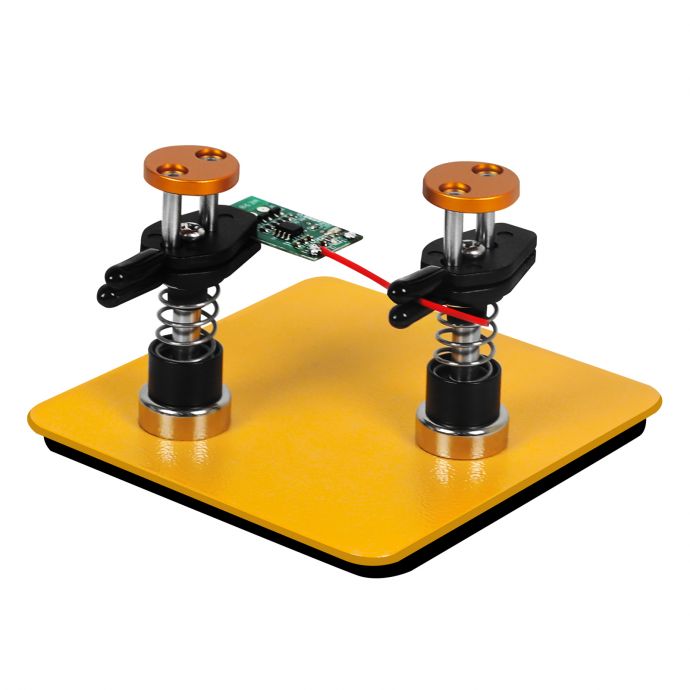
#### **Accurate Placement**
Strong magnets ensure each arm stays exactly where it’s set. Once positioned, arms won't drift or sag, preventing movement during critical soldering moments. Some models allow for micro-adjustment, letting you dial in the perfect angle and height with minimal effort.
#### **Hands-Free Operation**
By securely holding your workpiece, magnetic helping hands free both your hands: one for the soldering iron, the other for feeding solder. This improves accuracy and allows for precise control of temperature and solder flow. Result-driven projects, such as multi-pin ICs or densely packed PCBs, benefit hugely from this improved precision.
#### **Non-Invasive Grips**
Many magnetic helping hands offer soft or adjustable grips—such as silicone pads or custom clamp shapes. These minimize damage to delicate components, preventing scratches or pressure marks. The result: soldering that maintains the integrity of high-value parts.
---
### 2. Stability: Unwavering Hold Equals Fewer Mistakes
Stability during soldering is essential for clean joints, reliable connections, and consistent results. Magnetic helping hands deliver robust stability in several ways:
#### **Heavy, Anti-Slip Base**
A weighted steel or aluminum base anchors the device firmly to your workspace. Combined with rubber feet or anti-slip pads, this prevents sliding, tipping, or wobbling—even when manipulating large boards or multiple arms.
#### **Magnetic Locking**
Neodymium magnets integrated into each arm deliver a powerful hold. Once attached to the base or a metallic surface, arms stay locked. Some designs allow you to attach arms directly to a metal table, granting ultimate flexibility in positioning.
#### **Multi-Arm Cooperation**
Unlike classic helping hands, which typically have two arms, modern magnetic versions can offer three, four, or more independently adjustable arms. This allows you to:
- Stabilize multiple points on a circuit board
- Clamp wires and hold components simultaneously
- Prevent twisting or shifting during soldering
The improved stability directly translates into fewer errors—no more misaligned wires, accidental shorts, or messy solder blobs. For large or multi-stage projects, being able to keep every part in place reduces fatigue and boosts confidence.
#### **Resistant to Heat**
Traditional plastic arms can soften or warp when exposed to soldering temperatures. Magnetic helping hands, built from metal and heat-resistant materials, stay firm and reliable even during prolonged sessions.
---
### 3. Efficiency: Faster Work, Fewer Re-Do’s
Every soldering technician understands the value of time saved. Mistakes, such as cold joints or misplaced parts, require tedious correction. Magnetic helping hands streamline workflow by eliminating these issues, offering:
#### **Rapid Setup**
Arms, clips, and mounts attach magnetically and can be repositioned in seconds. You don’t have to tighten screws or adjust fixed pivots. Move an arm, clamp a wire, and get soldering—simple, fast, and intuitive.
#### **Adaptable Workspace**
Some models allow you to expand your helping hand by adding more magnets and arms. Need to solder a bigger board? Attach two bases together. Need extra clamps for intricate jobs? Add more magnetic arms.
#### **Improved Visibility**
With flexible positioning and non-intrusive grips, magnetic helping hands keep your workspace clear. This enhances visibility, reduces eye strain, and lets you focus on the critical soldering region. LED attachments or magnifying glass mounts are often available, further boosting efficiency.
#### **Minimized Component Handling**
Reducing the need to repeatedly pick up and reposition parts means less risk of contamination, bending, or damage. For sensitive electronics (like microcontroller boards or sensor circuits), this translates to increased reliability.
#### **Fewer Mistakes, Faster Recovery**
If an error does occur, magnetic helping hands make correction easier. Detach an arm, adjust the component, and resume soldering—no need to dismantle your entire setup.
---
## Practical Applications: From Hobbyists to Professionals
The versatility of magnetic helping hands makes them valuable across a range of soldering applications:
### **Electronics Assembly**
Building custom circuits often requires precise placement and simultaneous manipulation of multiple parts. Magnetic helping hands let you assemble, solder, and test prototypes with ease and repeatability.
### **PCB Repair**
When fixing broken traces, replacing SMD components, or reworking connectors, stable handling is crucial. The tool holds everything securely, letting you concentrate on micro-soldering without dealing with shaky hands.
### **Wire Connections**
Twisting, soldering, and sheathing wires—especially in multi-lead harnesses—becomes simpler with extra arms to hold everything in place.
### **Artistic Soldering**
Jewelry makers, model builders, and artists who use solder for metalwork appreciate the adaptability of magnetic helping hands. Delicate pieces can be clamped without scratching, positioned for perfect joints, and held securely during cooling.
### **Educational Environments**
Teachers and students benefit from magnetic helping hands by minimizing errors and frustration. Students focus on learning technique, not battling with unstable setups.
---
## Choosing the Right Magnetic Helping Hand
Not all magnetic helping hands are created equal. Here are key features to consider when selecting one for your soldering needs:
### **Number of Arms**
Basic models start with two, but advanced setups may have four, six, or even more independently adjustable arms.
### **Strength of Magnets**
Strong neodymium magnets ensure reliable gripping, even for heavy boards. Avoid weaker magnets—they'll compromise stability.
### **Adjustability**
Look for ball joints, flexible gooseneck arms, or segmented joints that allow for micro-adjustments and precise positioning.
### **Type of Grips**
Interchangeable tips (alligator clips, pads, hooks) allow adaptation for different components, minimizing risk of damage.
### **Base Material and Weight**
Heavier bases provide more stability. Metal is preferred over plastic, with rubberized feet for anti-slip functionality.
### **Accessory Compatibility**
LED lights, magnifying lenses, and extra arms enhance utility and improve performance for complex jobs.
---
## Maintenance and Tips for Optimal Use
To maximize the benefits of your magnetic helping hand, consider these tips:
### **Keep Magnets Clean**
Dust, solder, or flux residue can reduce magnetic grip. Wipe magnets frequently with a clean cloth.
### **Avoid Over-Tightening**
If your magnetic arms include screw joints, tighten only as much as needed. Over-tightening can strip threads or reduce flexibility.
### **Store Safely**
Keep the tool away from devices sensitive to magnetism, such as hard drives or magnetic tapes.
### **Use with ESD Precautions**
Some helping hands integrate antistatic materials, but always check compatibility with sensitive components.
### **Upgrade as Needed**
As your projects become more complex, consider expanding your helping hand with extra arms or specialized tips.
---
## Conclusion: More Than a Third Hand
Magnetic helping hands aren’t just an improvement—they’re a revolution in the soldering world. Offering precision placement, unwavering stability, and enhanced efficiency, these tools empower hobbyists and professionals alike to achieve cleaner joints, faster assembly, and fewer errors.
Whether you’re assembling your first project or fine-tuning professional-grade